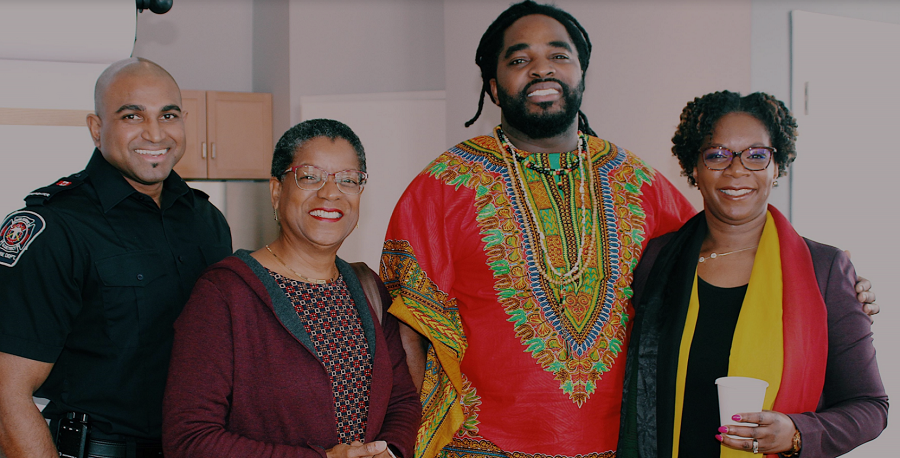
What happens when you build the table that was never there? Everything.
June 2020 was a particular kind of moment.
The world had paused, turned inward, and then erupted. Conversations about racial justice that had been happening in certain communities for decades suddenly became impossible to ignore in others. Organizations issued statements. Individuals examined themselves. Some of it was genuine. Some of it was performance.
In Orangeville, in Dufferin County, I had a choice. I could watch the moment pass. Or I could do something I had been thinking about for a while.
I founded the Dufferin County Canadian Black Association.
Why This County. Why This Moment.
Dufferin County is a predominantly white rural community where Black residents have long been part of the fabric without being formally part of the story — without recognition, without community infrastructure, without organized advocacy.
There is a difference between being welcome as an individual and belonging as a community. The former is a personal kindness. The latter is a structural reality. The DCCBA was my answer to that structural gap — not a protest organization, not a response to a single incident, but a long-term commitment to building what was not there.
True inclusion isn’t just about being invited — it’s about having the power to participate, contribute, and lead.
What the DCCBA Built in Dufferin County
In 2020, I also chaired Shelburne’s anti-racism task force. The recommendations produced under that leadership were fully adopted by Council and subsequently used as a model by other municipalities in Ontario.
Through the DCCBA, we championed the first formal Black History Month recognition in Dufferin County. We organized the first Pan African Flag raising ceremony — a visible, public declaration that the Black community of this county exists, contributes, and belongs.
We established scholarships and mentorship programs for Black students, because representation in civic life means little if the next generation does not have the resources to step into those spaces themselves.
Later, I was appointed as School Board Trustee — another table where I could ensure that the decisions being made reflected the full community they were meant to serve.
What Building From Scratch Actually Looks Like
I want to be honest about what building something from nothing involves.
It is showing up to meetings when the turnout is small. It is making the case, again and again, to people who are not hostile but who have simply never had to think about this before. It is doing the administrative work alongside the visionary work, because in the early days they are the same person.
There is no blueprint. You figure it out, guided by the clearest possible sense of why it matters.
My why was never complicated: I wanted the young Black people in this county to grow up knowing that their community had a foundation. That someone had named them, counted them, built something with them in mind.
Legacy is not planned at the end of a career. It is built in every decision you make for people who are not yet in the room.
What Community Leadership Taught Me About Legacy
Before founding the DCCBA, I thought of legacy as a capstone — something considered once you had done enough other things. Now I think of it as the operating principle.
Every decision I make in my leadership is a legacy decision. Because the choices I make today determine what is available to the people who come after me. This insight is at the heart of the ‘Leave’ pillar in The Distinctive Leader — the idea that leadership’s greatest work is always done for people who are not yet in the room.
An Invitation to Build
If you are sitting with an idea right now — an organization you feel called to build, a gap you can see clearly that no one else is addressing — I want to offer you this: the conditions will never be perfect. The resources will never be complete before you begin.
Build the table anyway. The people who need it are waiting.
Frequently Asked Questions
Q: What is the Dufferin County Canadian Black Association?
A: The DCCBA is a community organization founded in June 2020 by Alethia O’Hara-Stephenson to advocate for, celebrate, and support the Black community of Dufferin County, Ontario. It has championed Black History Month recognition, organized the first Pan African Flag raising ceremony in the county, and established scholarships for Black students.
Q: How do I start a community organization?
A: Start by identifying a clear, specific need that is not currently being met. Build relationships with people who share your vision. Begin with what you have, not what you wish you had. Document your impact from the beginning — it builds credibility and attracts support. And be willing to be patient with the pace of community change.
Learn more about the leadership philosophy that drives this work — The Distinctive Leader is available on Amazon.ca and at BookLore Orangeville.
