Somewhere in the last decade, “relatable” became one of the highest compliments available to a leader. Leaders are coached to share personal stories, acknowledge imperfection, demonstrate vulnerability, and signal that they are, at their core, just like the people they lead. The aspiration is admirable in theory. In practice, it has produced a generation of leaders who are extraordinarily good at being liked — and frequently confused about why likeability is not translating into the thing they actually need: the credibility that moves organizations through difficulty.
This is not an argument against human connection in leadership. It is an argument for precision about what connection is actually for.
Defining the Terms Without Sentiment
Likeability in organizational contexts is the quality of being perceived as warm, accessible, and personally appealing. It is socially valuable and not trivial — research by Amy Cuddy and colleagues at Harvard Business School on the warmth-competence model demonstrates that warmth assessments precede and shape competence assessments in social judgment. People decide whether they like you before they decide whether they trust your judgment. Likeability, therefore, is an opening, not an outcome.
Respect, in its organizationally meaningful form, is something different and more durable. It is the attribution of credibility, judgment, and reliability that leads others to defer to your perspective, advocate for your priorities, and follow your direction through conditions of uncertainty and discomfort. Respect is not the same as affection, and it does not require it. It is built not through relatability but through demonstrated capacity — through the repeated experience of a leader’s judgment being trustworthy, their commitments being honored, and their standards being consistently applied regardless of social pressure.
The confusion between these two things is not random. It has a specific origin.
How Relatability Became a Leadership Doctrine
The turn toward relatable leadership has roots in legitimate and important research. Edmondson’s work on psychological safety established that team environments in which leaders signal openness, acknowledge uncertainty, and model intellectual humility produce meaningfully better outcomes — more information sharing, more creative risk-taking, more reliable error correction. Leaders took the lesson seriously. Unfortunately, what many internalized was not psychological safety’s mechanism but its aesthetic: vulnerability as performance, accessibility as brand, openness as a communication style rather than a structural commitment.
Brené Brown’s work on vulnerability in leadership, widely influential and often superficially applied, has suffered a similar fate. Brown’s core argument is that vulnerability requires courage — that it is the willingness to act despite uncertainty and exposure, not the narration of past imperfection for social effect. But the corporate application frequently extracts the narration and leaves the courage behind. Leaders share personal struggles in town halls while maintaining environments in which their direct reports share nothing authentic at all.
The result is what organizational researcher Alison Fragale identifies as a credibility inversion — a dynamic in which leaders who prioritize warmth signals over competence signals gradually lose the informal authority that enables them to lead through resistance. They are liked. They are not particularly listened to.
Why Some Leaders Are Respected But Not Liked — and What That Reveals
There is a leadership archetype that organizational culture has spent considerable energy pathologizing: the leader who is not warm but is deeply respected. Not the tyrant — the archetype of domineering incompetence — but the leader who is exacting, direct, sometimes uncomfortable, and consistently right in their judgment. These leaders tend to create high-performing teams, attract people who want to be developed rather than merely affirmed, and retain organizational influence long after their peers have plateaued.
What distinguishes them is not the absence of care for their people. It is the form that care takes. Rather than warmth expressed through social accessibility, they express it through investment — through honest feedback, through high expectations, through the willingness to have the difficult conversation rather than the easy one.
A managing director I observed over the course of an organizational transformation was routinely described by peers as “hard to read” and “not a natural people person.” She was also the person every serious talent in the division requested to work under. When I asked her team members why, the answers were remarkably consistent: “She tells me the truth,” and “You always know where you stand,” and — most revealingly — “She never pretends.” This last comment is significant. Her people were not describing an absence of warmth. They were describing an absence of performance. And they found it, in a heavily performative organizational culture, deeply trustworthy.
The Competence-Warmth Trap in Modern Leadership Development
The warmth-competence model, developed by Fiske, Cuddy, and Glick, maps social judgments along two axes and finds that most people — and most leaders — are perceived as high on one dimension and lower on the other. The insight is important. The organizational development response has frequently been to coach leaders toward maximum warmth, often at the cost of projected competence.
This matters because the two dimensions activate different behavioral responses in others. Warmth produces social affiliation — people want to be around you, feel comfortable with you, and enjoy your company. Competence produces deference — people seek your judgment, follow your direction, and trust you in conditions of uncertainty. An organization in crisis does not need a leader people are comfortable around. It needs a leader whose judgment people will follow when they are afraid.
The relatable leadership doctrine, in its current form, is optimizing for the former while believing it is producing the latter.
Three Reflection Models for Leaders Navigating This Tension
Model One: The Disagreement Response Test
When a direct report disagrees with your decision, what happens? If they express the disagreement directly, engage in substantive debate, and feel safe advocating for their position, you likely have both warmth and credibility. If they agree publicly and route around you privately — seeking support from your peers or bypassing your decisions — you have warmth without the authority structure that makes it organizationally useful. The quality of disagreement you receive is one of the most accurate measures of genuine respect available.
Model Two: The High-Stakes Referral
Consider the last three high-stakes decisions made in your organization — the ones that carried real risk, real cost, or genuine uncertainty. Were you in the room? Were you sought out for input? Were your conclusions weighted? The leaders with real credibility are the ones others consult not because of their position but because of their track record of judgment. If you are consistently absent from the high-stakes conversations in your domain, the gap between being liked and being respected has likely already opened.
Model Three: The Consistency Audit
Respect is built through predictability — through the experience of a leader whose standards, values, and responses are stable across contexts. Ask: are you significantly different in high-accountability settings (board presentations, performance reviews, public commitments) than in low-accountability ones (informal conversations, one-on-ones, behind-closed-door discussions)? The gap between your public and private leadership identity is directly proportional to the credibility debt you are accumulating.
Relatability Redeemed: What Connection Actually Means in Leadership
This argument is not against human connection. It is against the reduction of connection to likability management. The leaders who have built genuine, durable influence — who are sought out, trusted, and followed across career transitions — are not disconnected from the people they lead. They are connected in a fundamentally different way: through the quality of their attention, the reliability of their commitments, and the consistency with which they treat people’s growth as more important than people’s comfort.
This is harder than being relatable. It requires leaders to be willing to disappoint in the short term in service of something longer. It requires them to sustain standards under social pressure, to give honest assessments in environments that reward positive ones, and to resist the approval gradient that modern professional culture has made nearly irresistible.
It is also, in my experience working with senior leadership teams navigating complex organizational change, the only kind of connection that holds when things get genuinely difficult. When the strategy is uncertain, when the restructuring is real, when the culture needs to change in ways that cost people something — being liked is not enough. Being trusted is everything.
A Final Word
The relatable leader is a compelling figure, and in the right organizational conditions, warmth and credibility genuinely reinforce each other. But the doctrine of relatability — the idea that being accessible and personally appealing is the foundation of leadership effectiveness — has produced something unintended: a generation of leaders skilled at managing how they are perceived and less practiced at developing the judgment, consistency, and intellectual honesty that make leaders worth following.
Respect is not the absence of warmth. It is what warmth becomes when it is grounded in something real.
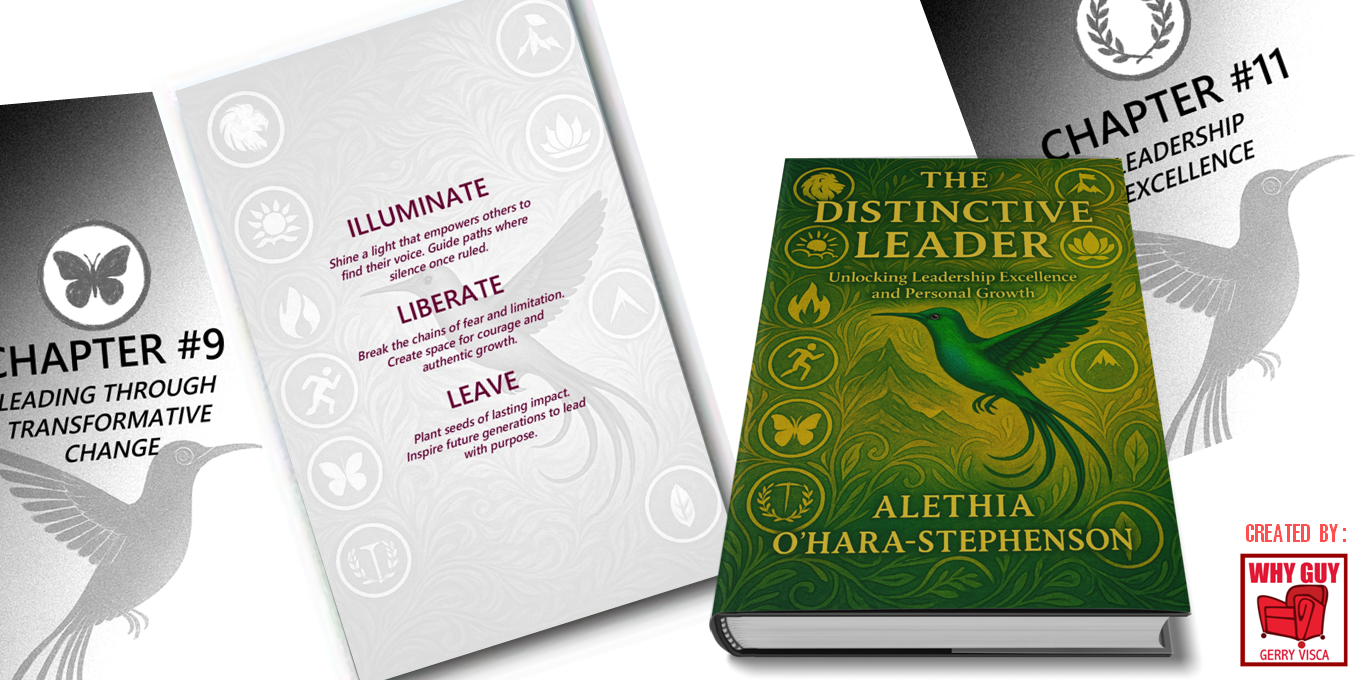
Alethia O’Hara-Stephenson is a leadership strategist and author of The Distinctive Leader. She advises executive teams and speaks at senior leadership forums on leadership credibility, influence, and organizational power dynamics.
